Why criminals target people
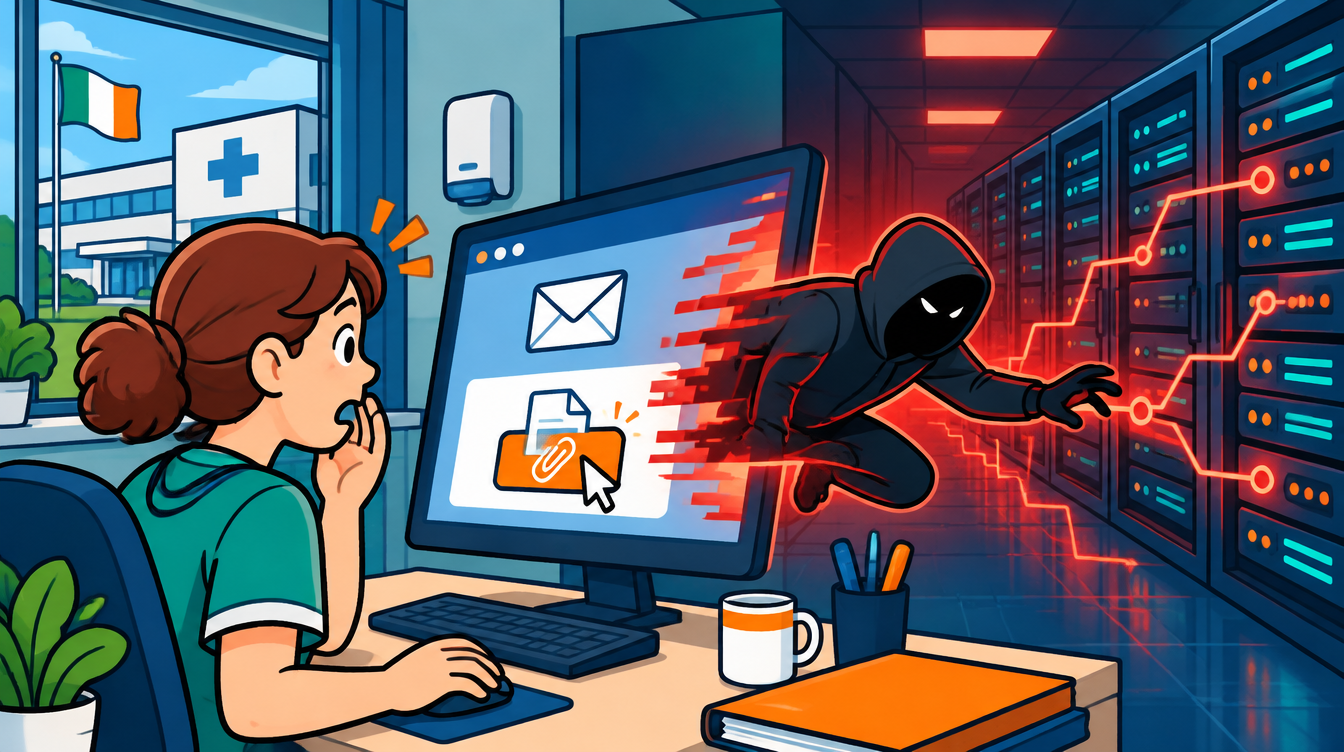
The front door is you
Most attacks don't start with a clever hacker breaking through a firewall. They start with a person being tricked into doing something: clicking a link, opening an attachment, sharing a code or paying an invoice. This is called social engineering.
The scale in Ireland
- €179 million was stolen through payment fraud in Ireland in 2025, up 27% on the year before, according to the Central Bank of Ireland.
- Two in three small and medium-sized businesses said they had been targeted by a financial scam in the past year, in a 2026 FraudSMART and ISME survey of ISME members. Most attempts arrived by email.
- Irish SMEs lost almost €19 million to email scams over two years, with an average loss of more than €22,000 per incident, according to FraudSMART.
Real case: one email attachment, about €100 million
On 18 March 2021, an employee of the Health Service Executive (HSE) opened a Microsoft Excel file attached to a phishing email. It let criminals into the HSE's network. They moved around unnoticed for eight weeks, then on 14 May 2021 launched Conti ransomware across the health service.
Thousands of appointments were cancelled and patient data was stolen. An independent report by PwC found warning signs had been missed. The HSE put the cost at about €100 million.
The lesson: one click can start it, and early warnings can stop it. The best defence is a team that pauses, checks and reports anything odd.
Knowledge check
1. What is social engineering?
2. How did the 2021 attack on the HSE start?
3. How much was stolen through payment fraud in Ireland in 2025?