Why criminals target people
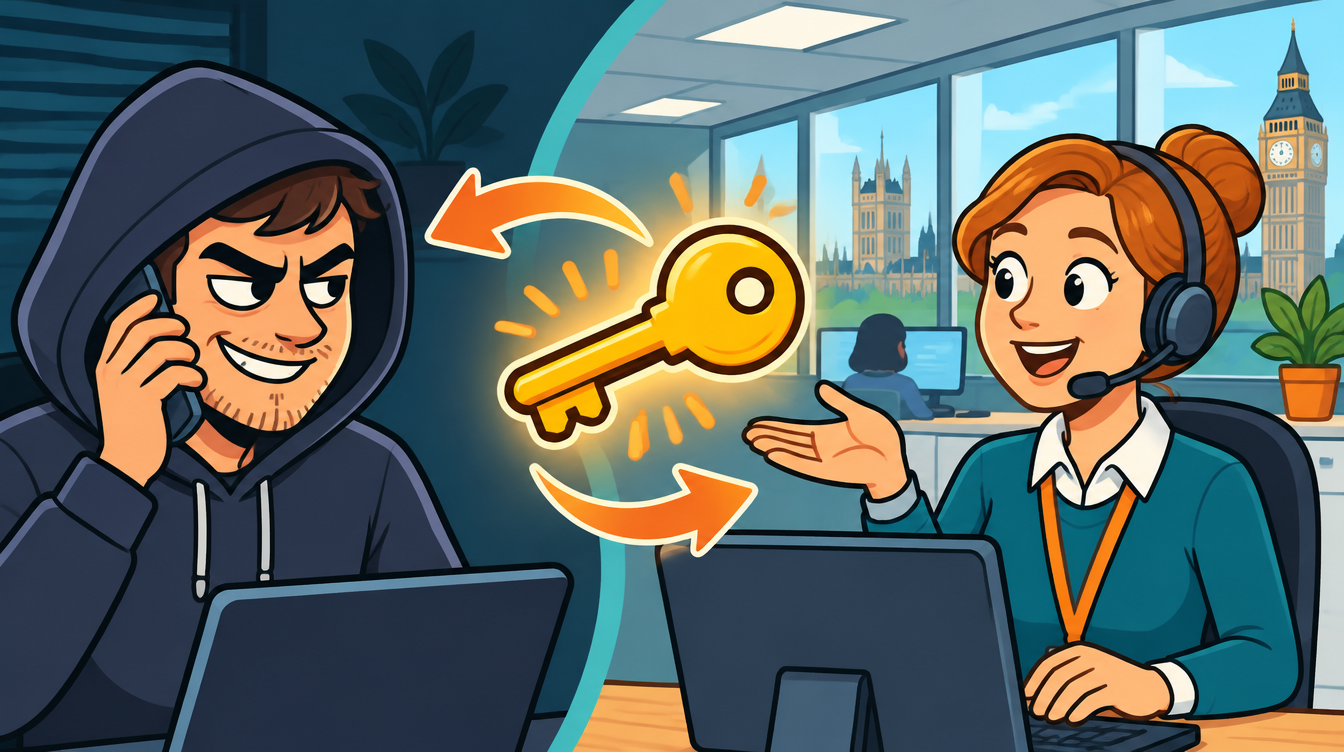
The front door is you
Most attacks don't start with a clever hacker breaking through a firewall. They start with a person being tricked into doing something: clicking a link, sharing a code, resetting a password or paying an invoice. This is called social engineering.
The scale in the UK
- 43% of UK businesses reported a cyber breach or attack in the past year, according to the government's Cyber Security Breaches Survey 2025/26.
- Phishing was by far the most common, hitting 38% of businesses.
- Criminals stole £1.28 billion through payment fraud in the UK in 2025, according to UK Finance.
Real case: reported impersonation, an estimated £300 million impact
In April 2025, Marks & Spencer suffered a cyber attack. Reports described attackers impersonating employees to obtain password resets through an IT help desk. M&S later confirmed that attackers gained access by tricking staff at a third-party contractor, but did not publicly confirm every detail of the reported help-desk sequence. Customer data was stolen and the attack disrupted its systems.
M&S paused online orders for weeks and estimated the attack would cost around £300 million in lost operating profit. The Co-op was also reported to have been targeted through help-desk impersonation. The lesson is that attackers can exploit trust and procedures, not just software weaknesses.
The lesson: criminals sound confident, urgent and official. The best defence is a team that pauses and checks.
Knowledge check
1. What is social engineering?
2. What method did reports describe in the 2025 M&S attack?
3. What was the most common type of attack on UK businesses in 2025/26?